Quantum Computing for Beginners: 7 Genius Ideas That Will Change Everything
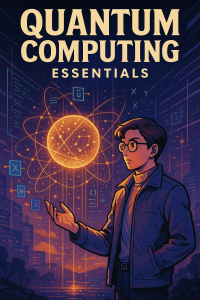
Quantum computing is not science fiction anymore – it is quietly rewriting what is possible.
Quantum computing for beginners is the starting point for anyone curious about the next great leap in technology. Unlike classical computers, which use simple bits to process information, quantum computers use qubits—units that harness the wildest principles of physics to solve problems once thought impossible. If you want to understand the future of computing, start here.
1. Qubits Do Not Just Hold Data – They Hold Possibilities
Traditional computers use bits that can be either 0 or 1. Quantum computers use qubits, which can be both 0 and 1 at the same time, thanks to a principle called superposition. This is not just a science trick—it means quantum computers can explore countless solutions at once. In quantum computing for beginners, think of qubits as spinning coins rather than simple heads or tails.
2. Superposition Is Not Confusion – It Is Power
Superposition allows a single qubit to perform multiple calculations at once. Imagine being able to solve a maze by exploring every path simultaneously before choosing the best one. For quantum computing for beginners, this is the magic that lets quantum computers take shortcuts classical systems never could.
3. Entanglement Is Connection Beyond Space
Entanglement is when two or more qubits become linked, so that the state of one instantly affects the other, no matter how far apart they are. Einstein called it “spooky action at a distance.” In quantum computing for beginners, entanglement is the secret ingredient that makes quantum networks and lightning-fast communication possible.
4. Classical Logic Breaks Down Here – And That Is the Point
Quantum computers are not just faster versions of your laptop—they are something entirely new. Problems like molecule simulation, cryptography, or massive data crunching that would take a classical computer years can be solved in seconds by quantum machines. Quantum computing for beginners means accepting that some old rules do not apply.
5. The Quantum Revolution Is Already Underway
Major companies, governments, and universities are racing to build practical quantum computers. These machines are already being used to develop new medicines, create secure communication systems, and model climate change in ways never before possible. Learning quantum computing for beginners puts you ahead of the curve in tech.
6. How to Start With Quantum Computing for Beginners
No PhD required. You can begin by exploring online simulators, basic coding tutorials in Qiskit or similar, and hands-on discovery kits. There are growing communities and free courses for quantum computing for beginners all over the web. Even reading about qubits and superposition puts you on the cutting edge.
7. Daily Practice: Quantum Thinking for Beginners
Try thinking in probabilities, not certainties. Imagine multiple solutions to every problem. Keep an open mind about what technology can do next. Quantum computing for beginners is not just about machines—it is about a mindset shift for the coming era.
⚡ Experiment With the Building Blocks:
Curious about how quantum physics and circuits work? Try these hands-on discovery kits for a deeper dive:
👉 EUDAX Physics Labs Basic Electricity & Magnetism Kits
Perfect for high schoolers, curious adults, or anyone who wants to make learning science tangible.
📘 Want the full guide?
Get the complete eBook:
👉 Quantum Computing Essentials →
For up-to-date science, simulations, and more quantum computing for beginners resources, visit the Quantum Country memory guide – trusted by educators and industry leaders.